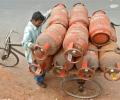
Researchers at CSIR-NCL have developed a technology for producing dimethyl ether (DME) as an alternative to liquefied petroleum gas (LPG), potentially reducing India's reliance on imports and enhancing energy security.

For weeks, the war skirted the edge of catastrophe without tipping over. Missiles flew, there was much destruction, commanders were assassinated, cities across the Gulf and even in Israel struggled to absorb the shock. But one line held: Energy infrastructure, the arteries of the global economy, remained largely untouched. That is no longer true. Prem Panicker continues his must read daily blog on the Gulf War.

Iran launched retaliatory military strikes targeting Israel and American military bases across the region, including in Qatar, the United Arab Emirates, Kuwait, Bahrain and Jordan.

The Lok Sabha witnessed a heated debate between BJP and Congress members regarding the handling of Naxalism, with the BJP accusing the previous UPA government of failing to contain left-wing extremism and the Congress defending its efforts to curb the threat.

Economist Jeffrey Sachs saw Gulf nations' decision to partner with the US through the Abraham Accords as an "invitation for disaster" as it made them more dependent on American protection.

Prime Minister Benjamin Netanyahu stated that Israel and the US struck Iran because Tehran had restarted its nuclear programme and it would have gone 'immune within months'. He claimed Iran was building new underground sites to shield its missile and nuclear programmes from attacks.

Despite India's electric passenger vehicle market experiencing an 83.6% year-on-year surge in FY26, new foreign entrants VinFast and BYD have significantly outpaced Tesla, which struggles with high import duties, a limited retail footprint, and a lack of local manufacturing commitment.

The ICC said the South African contingent had begun departing for home on Wednesday with "four players and five family members having boarded the flight".

The IRGC also warned residents to evacuate areas near military bases, security centres and government facilities.
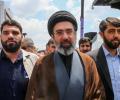
'Mojtaba Khamenei supervised the most recent repression in December 2025 and January 2026 which remains ongoing.'

16 days into the war, US forces were already running out of ground-attack missiles and Israel is about to expend its entire Arrow interceptor missiles by end March. To be sure, the Iranians are watching closely and that explains their defiant stance that 'Iran will end the war when it decides to do so and when its conditions are met', notes Ambassador M K Bhadrakumar.

The cost of the war is being counted not in the corridors of power in Washington or Tehran, but in Firozabad's darkened furnace rooms, Howrah's idle casting sheds, and a barbershop in Kochi where the wait is suddenly, inexplicably, an hour long, notes Prem Panicker in his must read blog on the Iran War.

In several parts of the world, access to proper sanitation remains a serious challenge. Many communities still lack household toilets or safe waste disposal systems, often due to water shortages, economic hardship or limited infrastructure.

Iran has launched a fresh wave of missile attacks against Israeli and United States-linked targets as the Islamic Revolutionary Guard Corps (IRGC) said it fired some of its heaviest missiles in the latest phase of its retaliatory campaign, while Israel Defence Forces alleged that many of the projectiles carried cluster bomb warheads.

The delegations from the US and Iran head to Islamabad on Friday, carrying a ceasefire that is already fraying, a Strait that is technically open and practically closed, and a negotiating agenda that would challenge even parties actually negotiating in good faith, which these groups are not. Prem Panicker continues his must read blog on the Iran War.
Mumbai hotels and restaurants are facing potential closures due to a critical shortage of commercial LPG cylinders, with similar disruptions reported across India. The crisis stems from revised government priorities for domestically produced natural gas, impacting the hospitality sector and potentially affecting tourism.

24 Indian-flagged vessels with 677 Indian seafarers were currently located west of the Strait of Hormuz, and four vessels with 101 Indian seafarers were stationed east of the strategic waterway.
Will rising tensions between US-Israel and Iran threaten crude oil supply through the Strait of Hormuz, putting India's fuel prices, imports, and economic stability at risk?

According to www.budgetyourtrip, Asia is home to some of the world's priciest travel destinations.

Sri Lanka show exit door to Afghanistan, qualify for Super 4s alongside Bangladesh

Alliances fight wars effectively only when they share an endgame. If Israel acted without US knowledge, then the military alliance is operating without real coordination at the level of strategic targeting. Neither picture is reassuring in a war that is no longer regional in its consequences. Prem Panicker continues his must read daily blog on the Gulf War.

Trump seems to have estimated that Ghalibaf is a pragmatic politician who is receptive to close relations with the US and is enthusiastic about fostering business and economic ties in particular, points out Ambassador M K Bhadrakumar.
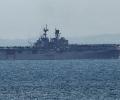
Although extensive air attacks have been carried out to destroy most of Iran's defence capabilities, the latter's resilience and sustenance during the war clearly indicate that the US landing force would encounter severe resistance in the operation, explains Commodore Venugopal Vengalil (retd).

According to information shared with students, those enrolled at Tehran University of Medical Sciences, Iran University of Medical Sciences, and Shahid Beheshti University of Medical Sciences have been offered two evacuation routes -- either through Armenia or Azerbaijan.

The intriguing bit is that Trump is likely to attend the talks in Islamabad this weekend -- if he does, it will be the clearest signal yet that the US is ready to exit the war with some sort of win to show, since he cannot afford to go for the talks and return empty-handed, notes Prem Panicker in his must read blog on the Iran War

The West Asia conflict escalated sharply as Iran launched missiles towards Israel, while Tehran confirmed the killing of its intelligence minister in Israeli strikes, marking the third assassination of a senior Iranian official in two days.

TMC leader Abhishek Banerjee criticises the Union government over the hike in commercial LPG prices, accusing the Centre of 'taking' from people while the Mamata Banerjee administration provides relief. He also challenged the BJP to present a report card of its work in Rajganj constituency.

'The next two to three weeks will not be decided in Washington.' 'They will be decided in Tehran, in whatever calculation Iran makes about the costs of continued resistance against the costs of appearing to have yielded.'

Following the BNP's victory in recent elections, Bangladesh is seeking to reset its relationship with India, emphasizing mutual benefit and a recognition of the changed political landscape.

Prime Minister Narendra Modi addressed the BJP's 47th Foundation Day, highlighting the Uniform Civil Code and 'One Nation, One Election' as key unfinished agendas. He also reaffirmed the party's commitment to implementing women's reservation in the 2029 elections and criticised dynastic politics.

Sensex and Nifty post steepest weekly loss in over a year, falling nearly 3 per cent.

Israel and the United States had a plan. Iran punched back. And now the Gulf is reeling, the world is beginning to feel the pain and, as on date, no one in Washington or Tel Aviv appears willing to admit that the punch has landed, notes Prem Panicker, continuing his must-read blog on the war in the Middle East.

The question is no longer whether the war will expand. It has. The next few days will tell us whether the war stabilises around Hormuz or whether the Strait itself becomes the trigger for a far larger rupture. What to watch for over the next 48 hours is simple: Any move by the US toward direct naval control of the Strait; any credible Iranian attempt to disrupt or mine shipping lanes and, critically, whether energy infrastructure in the Gulf continues to be targeted.If those lines are crossed in tandem, the war will no longer be containable within the region.
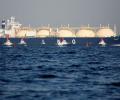
Analysts predict India will face oil price volatility and macroeconomic effects due to the escalating Iran crisis, though the country's oil supply chain is not yet structurally insecure.

As he settled down to his job as army chief, General Qamar Javed Bajwa -- who died last week; his passing did not merit even an obituary in major print or electronic media in Pakistan! -- developed a vision of reducing his country's and his institution, the army's traditional hostility toward India, points out Rana Banerji, who headed the Pakistan desk at RA&W.

This weekend, Donald Trump has begun to say the quiet part out loud -- that he wants to take control of Iran's oil, a formulation more in line with his robber-baron style of international relations.

'Was the five-day pause ever meant to hold, or was it simply another instrument of signaling, of positioning, of buying time in a war where even the pauses are tactical?' asks Prem Panicker in his must read daily blog on the Gulf War.

Airbus has inaugurated a state-of-the-art technology centre in Bengaluru, India, significantly expanding its strategic presence and supporting its 'Make in India' mission.
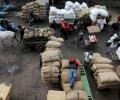
Moody's Ratings on Friday said with a 7 per cent GDP expansion in 2025 and 6.4 per cent in the next year, India will lead growth among emerging markets and across the Asia Pacific region.

Indians returning from the Middle East share their experiences of fear and uncertainty as the conflict between the US, Israel, and Iran disrupts travel and daily life, leaving many stranded and facing financial strain.
